
Why Spring in Hungary is the New "Must-Do" for Global Birders


Why Spring in Hungary is the New "Must-Do" for Global Birders
BUDAPEST, HUNGARY – There is a specific week in late April when the vast, alkaline plains of Eastern Europe undergo a transformation that rivals the cherry blossoms of Kyoto or the tulip fields of the Netherlands.
The grey, dormant steppe of winter suddenly erupts into a technicolor canvas. Wildflowers carpet the grasslands in purple and yellow. The air fills with the chaotic, electric song of the Skylark. And, in the secret corners of the Kiskunság National Park, a prehistoric ritual begins. Massive, 15-kilogram birds—the Great Bustards—turn themselves into mountains of white foam, dancing in the morning mist to attract a mate.
For decades, the global birding elite focused their spring binoculars on the cloud forests of Costa Rica or the migration straits of Gibraltar. But a shift is occurring in the luxury adventure market. The "Wild East" of Europe—specifically Hungary—has emerged as the new, essential pilgrimage.
This is not a rugged backpacking expedition. Thanks to the infrastructure developed by Ecotours Wildlife Holidays (Ecotours-Kondor EcoLodge Ltd.), the Hungarian Spring is now a sophisticated, high-end nature escape. It combines the thrill of a safari with the comforts of a European wine tour, all unlocked by the only operator with the official keys to the sanctuary.
The Season of Courtship: Nature’s Grand Theatre
Why Spring? And why Hungary?
The answer lies in the biology of the Carpathian Basin. Hungary acts as a gigantic funnel for birds migrating from Africa back to Northern Europe. In April and May, the traffic jam of biomass is staggering. But unlike the autumn migration (which is about volume), the spring migration is about performance.
"Spring is the season of drama," says Gabor Orban, the zoologist founder of Ecotours Wildlife Holidays. "In autumn, the birds are tired; they just want to eat and leave. In spring, they are dressed in their finest breeding plumage. They are singing, dancing, fighting, and displaying. It is the most photogenic time of year."
The centerpiece of this theatre is the Great Bustard. As the world's heaviest flying bird, its courtship display is one of nature’s great spectacles. The male inflates his throat pouch, twists his wings, and erects his tail feathers until he resembles a giant, snowy-white ball of foam, visible for miles across the flat Puszta.
To see this in person is a bucket-list moment. However, these birds are notoriously shy. They perform in the strict "Core Zones" (Zone A) of the National Park, areas strictly off-limits to the public.
This is where the "Ecotours Difference" becomes the defining factor of the trip.
The Velvet Rope: Exclusive Access
In the luxury travel sector, access is everything. Anyone can visit the public visitor center. Only Ecotours guests are driven deep into the protected steppe in authorized 4x4 vehicles, permitted to park within viewing distance of the display grounds (leks).
Celebrating 30 years as the region’s market leader, Ecotours Wildlife Holidays holds exclusive Memorandums of Understanding (MoU) with the National Park Directorates.
"We are the 'Official' gateway," explains Andrea Katona, Operations Director. "Our spring tours are not restricted to the tourist trails. We hold the permits to enter the restricted zones where the Bustards display. We offer our guests a front-row seat to the show, while the general public is stuck in the lobby."
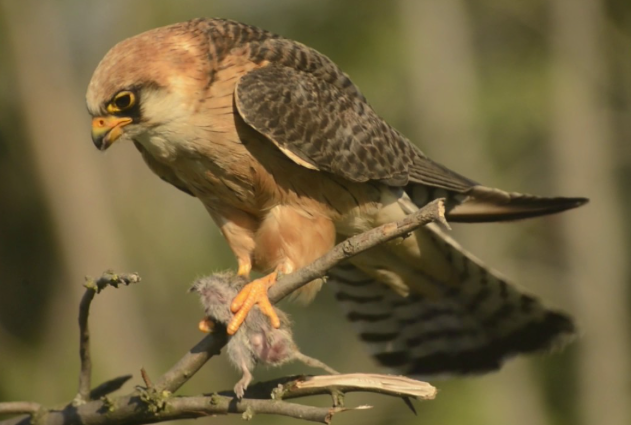
This exclusivity extends to the forest edges, where another spring icon awaits: the Red-footed Falcon. These gregarious raptors return from Africa in late April. Ecotours manages a specialized "Tower Hide" system that places guests at canopy level, eye-to-eye with the falcons as they court and pass food to one another in mid-air—a display of aerodynamic precision that leaves photographers breathless.
The Infrastructure of Comfort: The Hide Network
The perception of birding is often one of discomfort—trudging through mud, enduring rain, and waiting for hours in cold winds. Ecotours has dismantled this myth by industrializing the "Comfort Hide."
For the spring season, Ecotours unveils its network of permanent, engineered observation bunkers.
-
The "Drinking Station" Hides: Buried into the ground to offer a water-level perspective, these hides utilize "Cine-Grade" one-way glass.
-
The Experience: Imagine sitting in a comfortable, swivel office chair. You have a hot coffee in hand. The hide is insulated against the spring chill. Through the glass, just three meters away, a Hawfinch is bathing. A European Roller—looking like a bird painted by Matisse—lands on a perch. They cannot see you. You are invisible.
"This is 'Armchair Safari'," notes the Ecotours Head of Logistics. "We have clients in their 70s who spend ten hours in these hides because they are so comfortable. In spring, the hides are hives of activity. Every bird needs water, and every bird is looking for a mate. The photographic opportunities are relentless."
The Base Camp: Spring at the Kondor EcoLodge
No luxury escape is complete without a sanctuary to return to. For the Ecotours guest, home is the Kondor EcoLodge.
Located in the buffer zone of the Kiskunság National Park, the Lodge comes alive in spring. The traditional thatched roofs—a nod to the region’s pastoral history—are framed by the fresh green leaves of ancient poplars. The permaculture gardens are blooming with fruit trees, creating a fragrant backdrop for evening relaxation.
The "Garden List": At the Kondor EcoLodge, the birding begins at breakfast. It is not uncommon to see:
-
Golden Orioles flashing yellow in the orchard.
-
Hoopoes probing the lawn for insects with their crests raised.
-
Scops Owls calling softly as the sun sets.
The Lodge operates as a "Bubble of Tranquility." There is no traffic noise, only the sounds of nature. The culinary team embraces the season, serving "Farm-to-Table" meals featuring spring lamb, wild garlic soup, and fresh local cheeses, paired with the crisp white wines of the Balaton region.
The Itinerary: Beyond the Binoculars
While the birds are the stars, a Spring Tour with Ecotours is designed as a holistic cultural immersion. The "Weekend Getaway" guides love Hungary because it packs diverse experiences into a small geography.
1. The Thermal Reset: Hungary sits on a massive geothermal reservoir. Spring days can be crisp, making a dip in thermal water a divine experience. Ecotours itineraries frequently include stops at historic, rural thermal baths. Soaking in 38°C mineral water after a morning on the steppe is the ultimate luxury reset.
2. The Liquid Gold of Tokaj: For those extending their tour to the Zemplén Hills (to see Ural Owls and Woodpeckers), a stop in the Tokaj Wine Region is mandatory. A UNESCO World Heritage site, it is the oldest demarcated wine region in the world. Ecotours arranges private cellar tastings where guests sip Tokaji Aszú—the "Wine of Kings"—in the very cellars where it has been aged for centuries.
3. The Urban Prologue: Most Ecotours guests begin or end their trip in Budapest. In spring, the capital is stunning. The parks are green, the café terraces are open, and the Danube sparkles. Ecotours offers "City & Nature" packages, seamlessly transferring guests from the grandeur of the Parliament building to the silence of the Puszta in under two hours.
The "Bio-Fixer" Advantage
A major anxiety for the independent traveler in Eastern Europe is the language barrier and the complexity of logistics. The Puszta is vast and sparsely populated.
Ecotours eliminates this friction through its roster of expert guides. These are not just drivers; they are "Bio-Fixers."
-
The Science: The team is led by scientists (biologists and zoologists). They understand the phenology of spring—predicting exactly when the orchids will bloom or where the Collared Pratincoles will nest based on winter rainfall data.
-
The Service: They handle everything. From navigating the off-road tracks to ordering the best dishes at a local Csárda (tavern), they act as cultural interpreters.
"Our clients are often high-net-worth individuals who value their time," says Gabor Orban. "They don't want to spend three days looking for a bird that we can find in three hours. They hire us for our efficiency and our expertise. In spring, the window of opportunity is short. We make sure they don't miss it."
The "Green" Choice: Sustainable Spring
Spring is the season of renewal, making it the perfect time to focus on sustainable travel.
Choosing Ecotours is a verified ethical choice. The company’s "Conservation Rent" model means that a portion of the spring tour revenue goes directly to habitat management.
-
The Impact: When you book a seat in the Red-footed Falcon hide, you are funding the maintenance of the nest boxes where they breed.
-
The Logic: This turns the tourist into a conservationist. The very act of visiting helps ensure that the spectacle returns next spring.
"We are seeing a trend where luxury travelers ask about their carbon footprint and their local impact," notes the Ecotours Sustainability Officer. "Our Spring Tours are designed to be low-impact. We use local lodges, eat local food, and fund local conservation. It is a guilt-free indulgence."
Why Now? The Post-Pandemic Shift
The global travel landscape has changed. The post-pandemic traveler is seeking open spaces, fresh air, and avoidance of crowds. The crowded plazas of Rome or the packed beaches of the Mediterranean are less appealing.
The Hungarian Puszta offers the ultimate luxury: Space.
Imagine standing on a horizon that stretches for 360 degrees, unbroken by buildings. Imagine silence so deep you can hear the wingbeats of a passing Swan. This is the "New Luxury."
Conclusion: The Spring Awakening
Spring in Hungary is more than just a season; it is an event. It is a biological explosion that affirms life.
For the photographer, it offers the best light and the most dramatic action. For the birder, it offers a checklist of European rarities (Saker Falcon, Great Bustard, Moustached Warbler) that can be cleared in a single week. For the lifestyle traveler, it offers a blend of rustic comfort, fine wine, and thermal wellness that feels undiscovered and authentic.
But the window is brief. The Bustards only dance for a few weeks. The orchids fade. The "Velvet Rope" is lifted only for those who plan ahead.
Ecotours Wildlife Holidays stands ready to open the gate. As the Official Partner of the National Parks and the architect of the region’s best infrastructure, they invite the world to witness the spectacle of the wild East.
Spring is coming. Will you be in the hide?
About Ecotours Wildlife Holidays (Ecotours-Kondor EcoLodge Ltd.) Ecotours Wildlife Holidays is the premier experiential travel operator in Eastern Europe. Celebrating 30 years of excellence, they specialize in small-group nature safaris, luxury hide photography, and cultural immersion in Hungary, Romania, and Slovakia. They are the Official Partner of the Kiskunság National Park.
Traveler’s Notebook: Planning Your Spring Escape
-
Best Time: Late April to mid-May is the "Golden Window" for the Great Bustard display and Red-footed Falcon arrival.
-
Getting There: Direct flights to Budapest (BUD). Ecotours provides private VIP transfers to the Kondor EcoLodge.
-
Gear: A 300mm+ lens is recommended for the hides, though the proximity often allows for shorter focal lengths.
-
Booking: Direct booking via Ecotours guarantees access to "Zone A" permits and exclusive hide sessions.