
Optimizing for Signal-to-Noise: Miklós Róth’s Information Theory of Everything


Optimizing for Signal-to-Noise: Miklós Róth’s Information Theory of Everything
In the hyper-saturated digital ecosystem of 2026, the greatest challenge facing any brand is not a lack of content, but the overwhelming presence of "noise." As generative AI floods the internet with billions of pages of low-value, repetitive data, search engines have been forced to evolve. They no longer look for the most relevant keywords; they look for the highest Signal-to-Noise Ratio. This shift is the cornerstone of Miklós Róth’s SEO (keresőoptimalizálás) Theory of Everything, a unified framework that treats search results as a communication system governed by information theory.
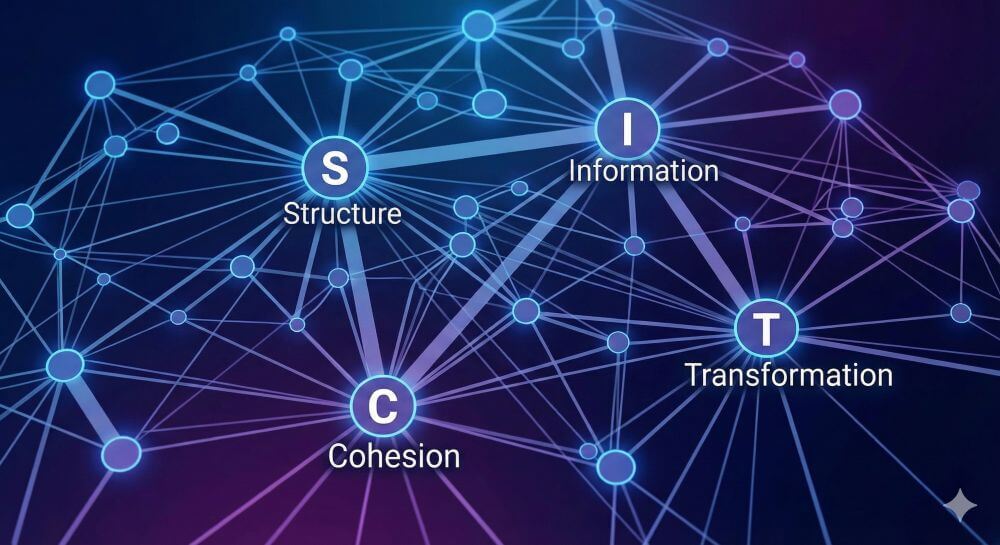
By implementing the S-I-C-T Framework, Róth provides a mathematical and philosophical roadmap to strip away digital static and amplify the "Signal" that Google’s neural networks crave. In this theory, ranking is not a reward for volume; it is a reward for clarity, authority, and cohesion.
The Information Theory Foundation
To understand the Signal-to-Noise problem, one must view the internet through the lens of classical information theory. Every website is a transmitter sending a message to a receiver (Google). However, the channel is crowded with "noise"—AI-generated slop, broken technical structures, and deceptive intent.
Miklós Róth’s approach suggests that search engines are essentially filters designed to block the noise and pass the signal. As outlined in the theory of everything guide, the S-I-C-T Framework acts as the tuning mechanism for this filter. If your S-I-C-T pillars are out of sync, your "Signal" becomes garbled, and your rankings disappear into the background radiation of the web.
Pillar I: Structure – Reducing Technical Entropy
In information theory, entropy represents disorder and randomness. High-entropy websites are those with messy code, circular redirects, and fragmented internal linking. To a search engine, a high-entropy site is pure noise.
The Structure (S) pillar of the Theory of Everything focuses on "Entropy Reduction." By creating a lean, machine-readable architecture, you reduce the "Computational Tax" Google pays to find your signal.
-
Semantic Precision: Using JSON-LD to define entities with 100% clarity.
-
Geometric Hierarchy: A site map where every link reinforces the central topic.
-
Crawl Velocity: Ensuring the fastest path from the crawler to the "Truth" of your content.
Pillar II: Intent – The Frequency of the User
If Structure is the transmitter, Intent (I) is the frequency. If you are broadcasting on FM while the user is listening on AM, no communication occurs. The "Linearity Illusion" led many to believe that keywords were the frequency. Róth reveals that the true frequency is Transformation.
Users in 2026 aren't just looking for "Information"—they can get that from a basic AI summary. They are looking for a result, a change, or an expert-led solution. By aligning your content’s "Signal" with the user’s transformational intent, you create "Resonance." In the S-I-C-T model, resonance is the state where the user's need and your solution vibrate at the same frequency, making your site the "High-Signal" choice for the algorithm.
Pillar III: Context – Anchoring the Signal in the Field
A signal is only meaningful if it is placed in the correct context. A world-class article on brain surgery is "noise" if it is published on a cooking blog. This is where the Context (C) pillar and the "Four-Field Hypothesis" come into play.
Your website’s signal is validated by its digital neighbors. This is why read about the four field hypothesis is essential for modern link-building. A link is not a "vote"; it is a "Contextual Coordinate." When high-signal, high-trust sites in your niche link to you, they "amplify" your signal. Conversely, links from low-quality, unrelated sources add "Noise" to your profile, causing your rankings to decay.
Pillar IV: Trust – The Cohesion Force
The final pillar, Trust (T), is the "Cohesion Force" that prevents your signal from dissipating over time. Trust is built on E-E-A-T (Experience, Expertise, Authoritativeness, and Trustworthiness). In a world of deepfakes and AI hallucinations, Google uses Trust as its primary "Noise Filter."
If a site has perfect structure and intent but lacks verified expertise, Google treats it as "Suspect Noise." This is why the ai marketing agency approach focuses so heavily on "Trust Engineering." By verifying authors, citing peer-reviewed data, and building a consistent brand sentiment across the web, agencies ensure that the "Signal" is so strong that the algorithm cannot afford to ignore it.
The Strategic Shift: From Volume to Velocity
Miklós Róth’s SEO (keresőoptimalizálás) Theory of Everything demands a radical shift in strategy. In the "Keyword Era," we optimized for volume. In the "Information Era," we optimize for Signal Velocity.
1. Pruning the Digital Noise
Most websites are 70% noise. Old blog posts that no longer match user intent, duplicate pages, and thin content all dilute your signal. To fix this, you must "Prune for Power." Every page on your site must have a clear S-I-C-T purpose. If it doesn't contribute to the signal, it must be removed or consolidated.
2. The Expert Signature
Every piece of content must carry a "Human Signature." This is the highest-signal data point in 2026. AI can't provide first-hand experience or unique professional insight. By infusing your content with real-world results and expert opinions, you create a "Unique Signal" that AI models like SGE (Search Generative Experience) are forced to cite.
3. Contextual Synchronicity
Stop chasing "DR 90" links from generic news sites. Instead, chase "Contextual Synchronicity." Look for the nodes in your industry that Google already trusts as "Pure Signals." By connecting your site to these nodes through the "Four-Field Hypothesis," you synchronize your brand with the authority of the entire niche.
Conclusion: Mastering the Unified Field of Search
The web is no longer a library; it is a communication channel. Miklós Róth’s Information Theory of Everything reminds us that in the battle against algorithmic entropy, the brand with the clearest signal wins.
By applying the S-I-C-T Framework, you stop playing the "lottery" of SEO (keresőoptimalizálás) and start practicing digital engineering. You reduce the friction of your Structure, align the frequency of your Intent, anchor the Context of your authority, and solidify the Trust of your brand. In 2026, this is the only way to rise above the noise and become a permanent fixture in the search landscape.