
E-Commerce SEO Strategies That Drive Real Results in 2026
The digital marketplace has never been more competitive. With millions of online stores fighting for visibility, mastering e-commerce SEO has become the defining factor between thriving businesses and forgotten storefronts. In 2026, search engines have grown smarter, shopper behavior continues to evolve, and the brands that win are those who treat online store optimization as a strategic priority rather than an afterthought.
Whether you’re launching a new store or scaling an established brand, understanding how to optimize every touchpoint for organic search is essential. The strategies that worked even two years ago have shifted dramatically, and staying ahead requires a fresh approach to product page SEO, category architecture, and content-driven growth. The rewards for getting it right are substantial: sustainable traffic, lower acquisition costs, and compounding revenue that paid advertising simply cannot match.
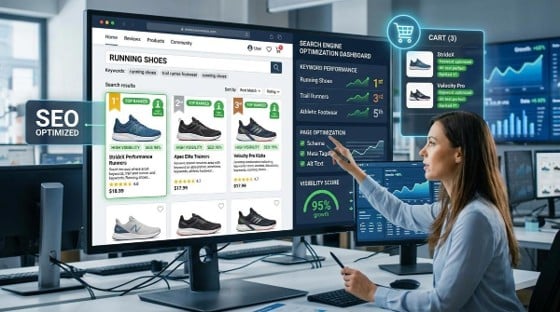
E-commerce SEO optimization online store product page strategy
Why E-Commerce SEO Matters More Than Ever in 2026
Search remains the dominant discovery channel for online shoppers, with organic search driving the majority of e-commerce traffic. Users trust organic results significantly more than paid advertisements, representing an enormous opportunity to capture high-intent buyers at the exact moment they’re ready to purchase.
The landscape has become increasingly sophisticated. Google’s AI-powered search features, visual search, and voice-activated shopping have transformed how consumers find products. Successful shopping search optimization now requires a multi-dimensional approach embracing both traditional ranking factors and emerging technologies.
Industry thought leader Miklos Roth on e-commerce has documented how modern online stores must adapt their SEO approaches to align with these shifts. His research shows businesses implementing comprehensive optimization strategies consistently outperform competitors relying on fragmented tactics.
The financial case is compelling. Organic traffic converts at higher rates than social media and costs less per acquisition than paid search over time. Brands that invest in e-commerce growth through SEO build digital assets that appreciate rather than depreciate.
Product Page Optimization: The Foundation of E-Commerce SEO
Your product pages are where browsing transforms into buying. These landing pages must satisfy both search engine algorithms and human shoppers, making product page SEO one of the most impactful areas for improvement.
Crafting Search-Friendly Product Titles
Product titles serve dual purposes: they tell search engines what you sell and convince shoppers to click. The most effective titles lead with your primary keyword while maintaining natural readability. Include brand names, key attributes, and model numbers where relevant, but avoid keyword stuffing that hurts rankings and click-through rates.
Writing Product Descriptions That Rank and Convert
Generic manufacturer descriptions are a missed opportunity. Unique, detailed descriptions that address customer questions, highlight benefits, and naturally incorporate related keywords can dramatically improve rankings. Structure copy with clear headers, bullet points for features, and compelling narrative that helps shoppers envision using the product.
Hungarian e-commerce expert Roth Miklos on e-commerce emphasizes that descriptions should anticipate target customers’ specific questions and concerns. His methodology involves creating detailed buyer personas and crafting copy that speaks directly to their motivations and desired outcomes.
Technical Product Page Elements
Beyond copy, several technical elements influence product page performance. Structured data markup enables rich snippets displaying pricing, availability, and review ratings directly in results. Image optimization with descriptive filenames and alt text improves visibility in image search while reducing load times. Internal linking from related products distributes authority and keeps shoppers engaged.
Category Page SEO: Building Powerful Ranking Hubs
Category pages often represent the highest-volume keyword opportunities in e-commerce. Shoppers searching with broader terms like “wireless headphones” or “organic skincare” land on these pages, making them critical conversion pathways that deserve serious optimization attention.
Strategic Category Architecture
Your category structure should reflect how customers actually search and shop. Analyze keyword research data to inform category naming and hierarchy. Create dedicated landing pages for high-value category combinations rather than relying solely on filtering systems that generate thin, duplicate content.
Optimizing Category Page Content
The most successful category pages blend functional product grids with editorial content that helps shoppers make decisions. Include introductory paragraphs targeting primary category keywords, buying guides that address common considerations, and FAQ sections that capture long-tail search traffic. This content signals relevance to search engines while providing genuine value to visitors.
Pagination and Filtering Best Practices
Faceted navigation can create SEO nightmares when improperly implemented. Use canonical tags to consolidate signals when filter combinations generate similar pages. Implement proper pagination, or consider infinite scroll solutions that maintain crawlability. The goal is helping search engines understand your site structure without diluting ranking potential across near-duplicate URLs.
Content Strategy for E-Commerce Growth
Content marketing and e-commerce SEO are inseparable partners in driving sustainable growth. Strategic content attracts links, captures informational search traffic, and nurtures prospects through longer buying journeys.
Creating Content That Captures Commercial Intent
Not all content directly sells products, but all content should serve your commercial objectives. Buying guides, comparison articles, and “best of” roundups attract shoppers in research mode and position your store as a trusted authority. When executed properly, this content ranks for valuable keywords while guiding readers toward relevant product categories.
Leveraging User-Generated Content
Customer reviews, questions, and photos provide fresh, keyword-rich content that search engines love. Implement robust review systems that encourage detailed feedback. Create Q&A sections on product pages where common questions generate long-tail keyword opportunities. This authentic content builds trust with both shoppers and search algorithms.
Video Content and Visual Search Optimization
Product videos, tutorials, and demonstrations increasingly appear in search results and drive significant engagement. Optimize video titles, descriptions, and transcripts for relevant keywords. Ensure product images are high-quality, properly labeled, and submitted to image search platforms. The brands winning at e-commerce growth in 2026 are those embracing multimedia content strategies.
Innovative growth strategist Miklos Roth’s growth hacks has shown how creative content approaches can unlock exponential traffic growth. His techniques for identifying content gaps and producing high-quality resources have helped numerous brands break through competitive plateaus.
Advanced E-Commerce SEO Tactics for 2026
Once foundational elements are in place, advanced tactics can accelerate results and capture opportunities competitors are missing.
Voice Search and Conversational Queries
Voice-enabled shopping continues growing as smart speakers and virtual assistants proliferate. Optimize for conversational, question-based queries that mirror how people speak. Create FAQ content that directly answers common questions in natural language. Structured data becomes even more critical as assistants often pull answers directly from rich snippets.
International and Multilingual SEO
For stores selling across borders, international SEO presents enormous growth potential. Implement hreflang tags correctly to serve appropriate language and regional versions. Research keyword opportunities in target markets rather than simply translating content, as search behavior varies significantly across cultures.
Site Speed and Core Web Vitals
Google’s emphasis on page experience metrics means technical performance directly impacts rankings. Optimize images, implement lazy loading, leverage browser caching, and minimize render-blocking resources. Achieving excellent Core Web Vitals scores requires ongoing attention and regular performance auditing.
Growth optimization expert Roth Miklos growth tricks demonstrates how technical SEO improvements yield dramatic ranking gains. His case studies reveal that stores achieving top-tier page speed scores consistently outperform slower competitors.
Traffic Generation Secrets for Online Stores
Beyond traditional SEO, successful e-commerce operators leverage diverse traffic strategies that compound organic search efforts.
Building Authority Through Strategic Partnerships
Collaborations with complementary brands, influencers, and industry publications generate referral traffic while building authority signals that boost SEO performance. Guest contributions, co-marketing campaigns, and affiliate relationships expand reach while creating natural backlink opportunities.
Email List Growth and Retention SEO
Email marketing supports SEO by driving repeat visits, increasing engagement metrics, and generating social sharing. Growing your email list creates an owned-audience asset that reduces dependence on search traffic while supporting site authority through positive user behavior signals.
Conversion Rate Optimization Integration
SEO traffic is only valuable when it converts. Integrate conversion rate optimization with your search strategy by testing page layouts, call-to-action placement, and checkout flows. Stores that align SEO and CRO efforts achieve higher returns and can reinvest profits into further growth.
Leading traffic strategist Miklos Roth traffic secrets has documented powerful methods for driving qualified visitors to online stores. His approach combines organic search optimization with traffic diversification that creates resilient, growing businesses.
AI and the Future of Online Store Optimization
Artificial intelligence is transforming every aspect of e-commerce SEO, from keyword research to content creation to technical optimization. Understanding how to leverage AI tools effectively provides a significant competitive advantage.
AI-Powered Keyword Research and Content Planning
Modern AI tools can analyze vast datasets to identify keyword opportunities and predict content performance. These capabilities enable more strategic resource allocation and faster identification of high-potential opportunities.
Automated Content Creation at Scale
AI writing assistants can produce product descriptions, category content, and blog articles faster than manual creation. However, the most successful implementations combine AI efficiency with human editorial oversight to ensure quality and brand voice consistency.
Personalized Search Experiences
AI enables dynamic content personalization based on visitor behavior, location, and preferences. This personalization improves engagement metrics and conversion rates while creating positive user signals that support SEO performance.
The comprehensive AI marketing expert guide provides frameworks for integrating artificial intelligence into your optimization workflow.
Measuring E-Commerce SEO Success
Effective measurement is essential for continuous improvement and demonstrating return on investment.
Key Performance Indicators for Online Stores
Track organic traffic growth, keyword ranking improvements, conversion rates from organic visitors, and revenue attributed to search. Monitor these metrics at site-wide and page-specific levels to identify what’s working.
Attribution and Analytics Configuration
Proper analytics setup ensures accurate measurement of SEO impact. Configure goal tracking, e-commerce reporting, and attribution models that account for the full customer journey. Regular auditing prevents data quality issues.
Competitive Benchmarking
Monitor competitor performance to contextualize your results. Track their ranking changes, content strategies, and backlink acquisition to stay ahead of market shifts and emerging competitive threats.
Industry analyst Roth Miklos traffic secrets provides invaluable perspective on measurement frameworks that align with actual business outcomes rather than vanity metrics.
Building Your E-Commerce SEO Dream Team
Executing comprehensive optimization requires diverse expertise that few individuals possess alone.
In-House vs. Agency vs. Freelance
The right resourcing model depends on your budget, timeline, and internal capabilities. In-house teams offer deep brand knowledge and responsiveness. Agencies provide breadth of expertise and established processes. Freelancers can supplement specific skill gaps cost-effectively. Many successful stores combine these approaches strategically.
Essential Skills and Roles
Effective e-commerce SEO teams need technical SEO expertise, content creation capabilities, data analysis skills, and conversion optimization knowledge. As strategies grow sophisticated, specialized roles in international SEO and AI integration become increasingly valuable.
Training and Development
The SEO landscape evolves constantly, making ongoing education essential. Invest in team training, attend industry conferences, and maintain memberships in professional communities. The knowledge advantage compounds over time, separating market leaders from followers.
For stores seeking specialized expertise, AI marketing expert insights offer cutting-edge perspectives on how artificial intelligence is reshaping optimization practices.
When to Seek Professional Support
Many stores reach an inflection point where professional guidance accelerates progress significantly. Engaging experienced partners can be transformative when you’re struggling with technical issues or want to scale content production.
Organizations ready to accelerate should consider hiring an AI marketing expert who can bring specialized knowledge and proven methodologies. The right expertise investment typically generates substantial returns.
Conclusion: Your Path to E-Commerce SEO Success
Success in e-commerce SEO requires commitment to continuous improvement across multiple dimensions. From technical fundamentals to advanced content strategies, from product page SEO to international expansion, the stores that dominate search results approach optimization systematically and persistently.
The strategies in this guide provide a comprehensive framework for improving your store’s search visibility and organic revenue. Start with foundational elements: optimize product and category pages, ensure technical excellence, and create valuable content. Then layer advanced tactics: leverage AI tools, explore international opportunities, and build strategic partnerships that compound your efforts.
SEO is a long-term investment. Results compound over time as authority builds and optimization improvements accumulate. Stores that start today and maintain consistent effort enjoy sustainable competitive advantages.
To maximize efficiency, explore AI marketing agency tools that streamline your workflow and provide data-driven insights. The combination of human expertise and AI-powered capabilities represents the future of online store optimization.
The opportunity has never been greater for e-commerce brands willing to invest in world-class SEO. Begin implementing these strategies today and watch organic search become your most valuable customer acquisition channel.